Changing Times and Changing Minds – A Post for Future Physicians
Yesteryear
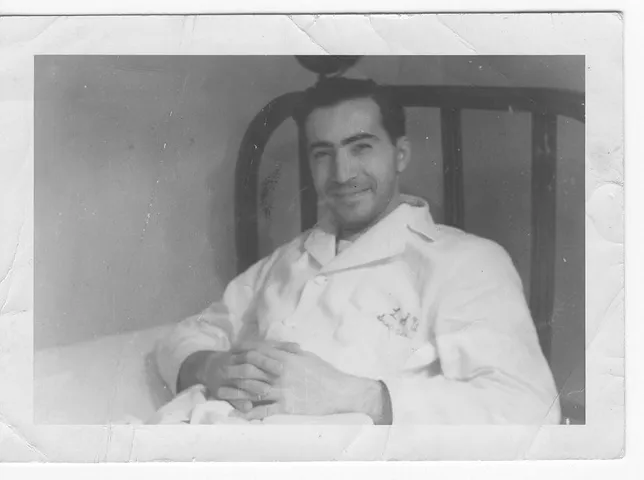
John L. DiLeo, MD, circa 1944
Last century, which for many of us who are alive this century wasn’t that long ago, there were no subspecialties until the latter half. Essentially, you became a doctor or a dentist—or even a podiatrist. If you went to medical school for four years, you did an internship and then you hung up a shingle and began practicing, come what may. You did general practice, cardiology, surgery, neurosurgery, thoracic surgery, dermatology, and on and on. You stuck with things you were good at and ran from the things at which you weren’t.
Medicine hits puberty
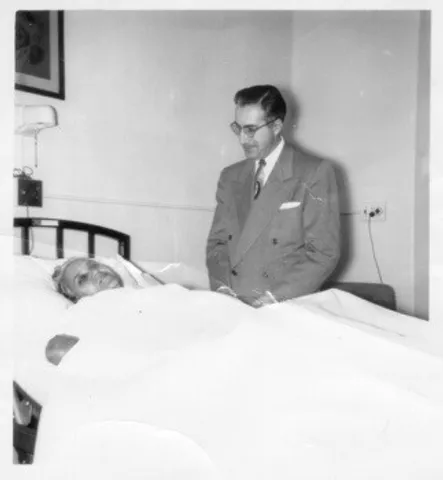
John L. DeLio, MD, circa 1949
My own father slipped in right after this time, in which the first specialties began branching into internal medicine, surgery, pediatrics, psychiatry, dermatology, etc.
But the branches of medicine sprouting from the main trunk were still pretty thick; for example, surgery meant all surgery—abdominal, chest, cardiovascular, neuro, as well as the less glamorous amputations, draining abscesses, and wound care. In my dad’s time, I know he did hysterectomies, appendectomies, vein stripping, colon surgery, proctology, and many other things that just having his diploma and a knife qualified him for. True, it was a pretty good diploma as diplomas go, but today we know that you can’t know everything about everything.
Medicine comes of age
Today, medicine’s common paths have forked into all of the disciplines that had been lumped together in the past. The branches of the tree have fanned out very intricately. Today’s medical students can expect to specialize and perhaps even subspecialize. It seems so wide open the day you begin medical school, although most new students are fairly sure of what type of exact doctor they plan on becoming.
In the ensuing years, however, that solid-rock certainty falters, crashes, and then burns, like relationships that just didn’t work out. By the end of med school, very few medical students end up being the exact type of doctor that they thought they’d be in the beginning. So what’s the difference? You go in wanting to be one type of doctor, and you come out being a different type altogether. What happens during medical school that wraps you into this cocoon of transformation?
Clinical happens
What happens is that the clinical experience, usually concentrated in the latter two years of med school, brings reality to those who thought they knew what they wanted to be when they grew up. For you, once you arrive into the trenches of everyday clinical life, you begin to realize what you like and don’t like about the different specialties. True, every specialty has its good and its bad, but you begin to apply filters as to how bad is too bad and how good is good enough. It’s a tricky formula, because it determines the rest of you career.
I myself was going to follow in my dad’s footsteps and go into surgery. After all, I had a ready-made practice just waiting for me. Then I spoke to a resident in general surgery:
Me: “How is the residency?”
Him: “O.K. But let me ask you…are you married?”
Me: “Um, no.”
Him: “Well, great! That means when you spend 40 of every 48 hours at the hospital, you won’t have to worry about a wife and kids back home.” (Translation: the divorce rate is high.)
The lightning bolt
This was my epiphany. Even though I had no wife and kids—yet—that might change. And if it didn’t, what if I didn’t want to spend the next four years of my youthful going-out-with-friends, attending-live-concerts, playing-weekend-sports, getting-drunk-sometimes life. Instead, living at the hospital 40 out of every 48 hours? Just because. As it turned out, I didn’t.
My friend ended up dropping out of his general surgery program to finish in urology and has been living with wife and kids happily ever after. For me, our conversation prompted me to take some inventory.
I still wanted to do surgery, but I didn’t want to go cutting off legs, debriding wound infections, or get into a LOT of pus. I looked at OBGYN. Hmm…very interesting surgery, a joyful specialty with all really neat delivering babies stuff; patients were neither geriatric nor pediatric (personal avoidances for me), and everyone was generally young and healthy and usually got better. Also, I still wanted some primary care work, and OBGYN was considered primary care. And so, OBGYN it became in the last half of my senior year of med school after 3½ years of certainty toward general surgery. When I rotated through OBGYN, it confirmed my filters for the good and the bad. Sure, there was a lot of night work, and even a little pus, but this was true in most clinical specialties. I never looked back.
This is in no way a commercial for obstetrics and gynecology. My good-vs.-bad filters for OBGYN may very well be different filters that point you to ophthalmology, gastroenterology, hematology, pathology, or any of the others. You go into school thinking of all the good—mainly derived from the romantic, sexy specialties as depicted on TV. Then you get into the trenches of the clinical years and you see the bad, too. That’s when you calculate the equation that’s right for you.
S = G/B,
S = your specialty choice; G = all the good things about it; B = all the bad things about it. You want the highest top heavy number.
Of course, this is meant to be tongue-in-cheek. After all, is proctology commutative? Can you take the square root of nephrology? (It’s urology, by the way.) When you add up all the columns, don’t forget to carry the gallstone.
You get the general idea. Like most things in life, it’s just arithmetic, and the variable in the function is you. Be a rational number.
Related Posts