Following Up on an Application Without Sounding Desperate
pexels.com/@tima-miroshnichenko
Sometimes the most difficult time during the job application process is waiting to hear back once you have submitted your application. This period can take weeks, and it is difficult to know how to best handle the wait. Many people find that there is a fine balance between not wanting to seem apathetic by submitting the application without timely follow up and not wanting to seem desperate by following up too quickly or too intensely.
Understanding What Happens When You Apply
When you actually submit an application, understanding what happens to it can help you better understand how to follow up. This process can be very different (based on the system used by the employer), but generally follows the same basic process.
Prescreening is the first step and varies in how thorough it is. This step is often done through computer software and makes sure that you meet the basic qualifications of the job. This may be a very basic screening or may be more thorough, depending on how it is set up. Often, a human will never see your application if it does not pass this step, but you will typically receive an automated notice if this is the case.
The next step is review by human resources. Someone in the human resources department will look through applications that are in the system and, depending on their internal process, will send all eligible resumés on to the hiring manager or will send the best candidates on to the manager.
The final step is for the hiring manager to select candidates for interviews. Some managers will see everyone that has applied, while others will only see those candidates that are selected by human resources for them to review.
Initial Follow Up
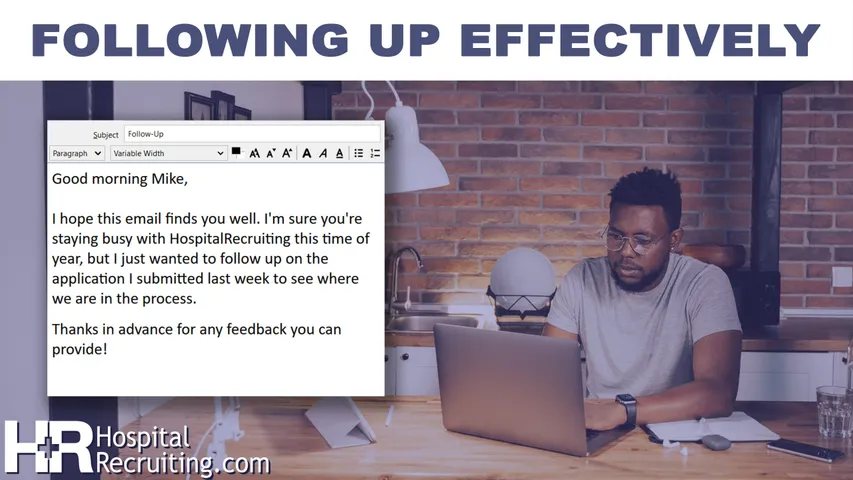
After you submit an application, following up is definitely necessary if you don’t hear back from your potential employer. Different people may recommend different lengths of time, but typically waiting about a week gives the human resources department time to look at and process your application. Initial follow up should be through the human resources department, as they are the first ones who will be handling your application.
Calling human resources may be difficult. Large entities, such as hospitals, receive many applications every day and try to avoid having outside applicants easily access their human resources. Typically, you should start with the online number for human resources if it is accessible. Some systems may require you to leave a message while others may allow you to reach a real person. If you are having difficulty reaching human resources or finding their number, you can call the main number and ask the operator to transfer you to human resources. This approach works even better if you can discover the name of someone in the human resources department, such as by using LinkedIn.
You may find that human resource personnel that handle a high number of applicants may not have even pulled your application from the system and sent it to the hiring manager. Calling human resources can sometimes prompt them to do this, increasing the chances you will be selected for an interview. The best way to approach a follow up call is to ask the person you speak with if he/she has had the opportunity to review your application. This way you will learn where your application is in the process, and you will not sound desperate. For the initial call, it is typically best to avoid pushing for a timeframe for a decision.
Continued Follow Up
If you continue not to hear back, calling about a week to a week-and-a-half apart will help you to come across as persistent, but not as desperate. If you continue not to make any progress, it is appropriate to start asking for a timeframe on the decision and gently encouraging them to give you a better idea of when you should expect to hear what the outcome of your application is.
Contacting the Hiring Manager
Calling a hiring manager is a potential strategy that will likely have an effect, although the effect will probably be either decidedly helpful or decidedly negative. Some managers will view direct contact with them as a positive trait that makes you seem eager and dedicated to doing what is necessary to achieve your goals. Others will perceive this as a sign of desperation and as annoyance to their busy schedule. You can influence how this is perceived by how you express yourself on the phone, but ultimately this can be a bit of a gamble.
Contacting the hiring manager can be difficult but will not be impossible. Ideally, you should try to find the name online through LinkedIn or through the entity’s website. You will have to contact the operator and ask to be put through to the manager. Having the manager’s name makes this type of call seem more natural. If you decide to do this, be prepared to leave a message, as managers are often busy in meetings or other obligations and may not be at their phones.
Internal Contacts
The one exception to following up on applications through traditional channels is if you have a connection who works where you are applying. Knowing someone who is already employed where you are applying provides a connection that is much more effective when following up on your application. If an internal employee follows up on your application on your behalf, their inquiries will be more accepted, and they will better understand how to go about following up far better than you would. If you have an internal connection, initially asking them to follow up for you instead of trying to do it yourself can be far more productive.
Ultimately, follow up is a vital part of applying for a position. Many applications sit in a computer system and are never seriously looked at simply because there were so many applications that they were overlooked. Following up helps to bring attention to your specific application and enhances the likelihood that you will get an interview, and ultimately, an offer of employment.
**Click to read more on succeeding in a difficult job market after graduation.**
Related Posts