What Physician Assistants Should Expect from a Recruiter
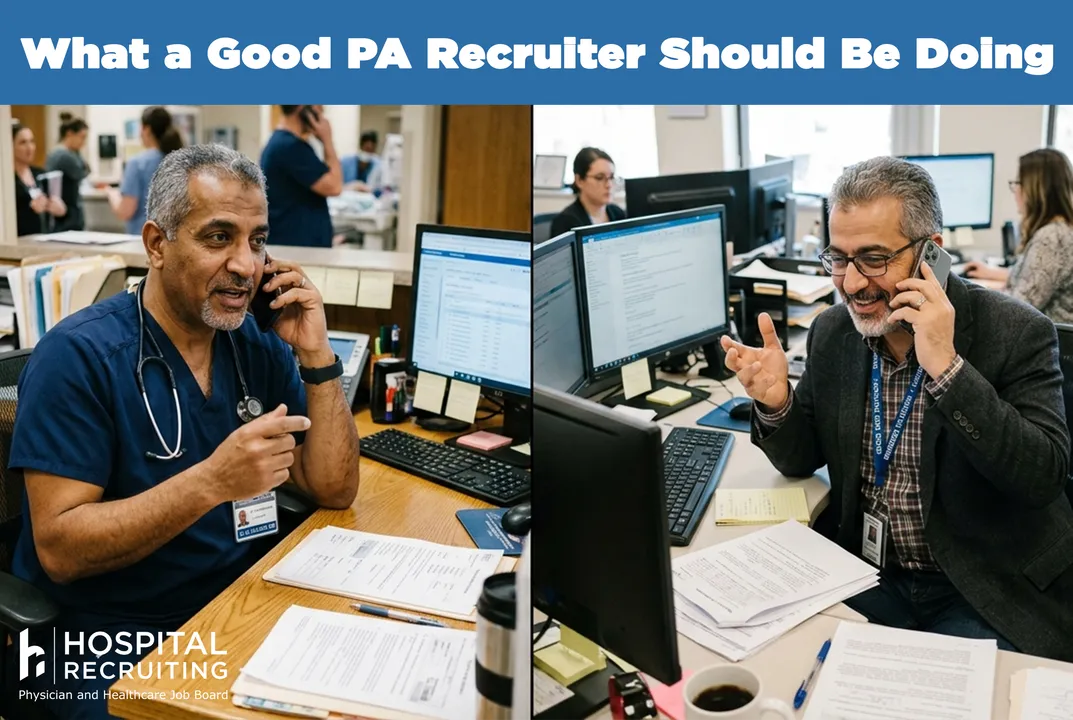
As a Physician Assistant, finding your first job, or a completely new one, can be daunting. There are many factors to consider: where you’ll work, how you’ll negotiate your salary, and whether the role is even a good fit for your circumstances. A good recruiter can take much of that weight off your shoulders.
One thing worth knowing up front: recruiters are paid by the hiring employer, not by you. The placement fee comes out of the organization’s budget, so partnering with a recruiter costs you nothing. That single fact changes how you should think about the relationship: a recruiter is an ally you can use freely, and a good one earns that fee by getting the fit right.
What recruiters can do for you
A good recruiter opens doors that may not have been available otherwise. They have working knowledge of the clinics, health systems, and hospitals in their area and can offer insights you couldn’t easily find on your own.
Just as important, a strong recruiter understands the hiring and onboarding issues specific to PAs. These include licensure timelines if you’re a new grad or switching states, DEA registration, and credentialing delays that vary by health system. A recruiter who knows your target state can also flag what actually matters there, including collaborative or supervisory practice requirements, scope-of-practice rules, and license reciprocity, before those details slow down your start date.
They can also prepare you for the interview. Because they know specific HR departments and their idiosyncrasies, they can help you anticipate questions, advise on what to ask, and give insight into who will be in the room.
Many will even coach you through salary negotiation, a major worry for PAs, and especially for new graduates who have never negotiated a clinical offer before.
Communicating with recruiters
Expect a few things from how a recruiter works with you.
They should be deeply knowledgeable about the sites that are hiring, whether that’s a solo physician, a clinic, or an entire health system, and understand each one’s hiring process.
They should also be responsive and detail-oriented: on time, quick to follow up, and treating your search as a priority.
Above all, a good recruiter prioritizes fit over a quick placement. That starts with honesty: if you’re not the right candidate for a role, they should tell you, even at the cost of a placement fee. Because that fee is what they stand to lose, a recruiter who’s straight with you when a job isn’t right is showing you exactly the kind of judgment worth trusting.
Picking the right recruiter
So how do you screen a recruiter to make sure they’re a good fit for you?
First, confirm they’ve worked with Physician Assistants before. Most have, but it’s worth verifying: PA hiring has enough quirks that experience placing physicians or nurses doesn’t fully transfer.
Second, look for familiarity with the region or the type of system you’re targeting. An academic medical center, a rural critical-access hospital, and a large multispecialty group each hire differently. They don’t need to have placed someone at your exact target hospital, but they should understand how organizations like it operate.
Finally, a good recruiter communicates well: responsive, direct, and honest.
Conclusion
While the transition into a new clinical or industry role presents a complex set of variables—from salary negotiations to cultural fit—you don’t have to navigate them in isolation. By partnering with a recruiter, you turn a daunting search into a strategic advantage, ensuring your next career move is as personalized as the care you provide.
**Editor's Note: Ready to see what’s out there? Browse current Physician Assistant openings on HospitalRecruiting.com and connect with employers actively hiring.**
Related Posts