Health Hazards of Working Nights
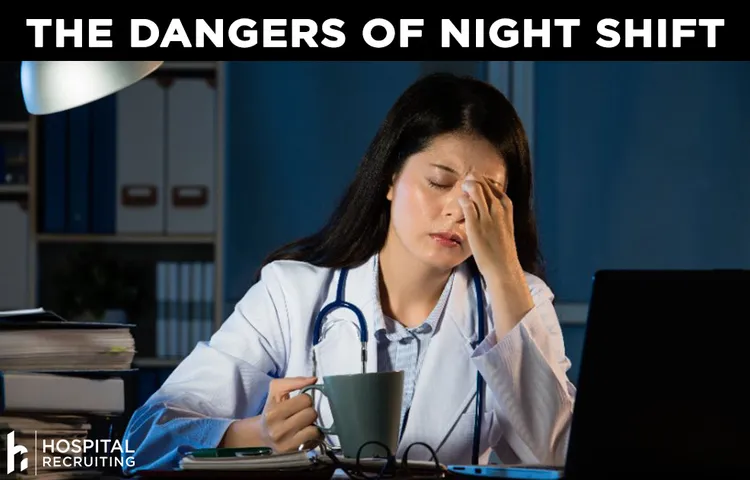
It's no secret that working nights is challenging. Health care workers that work nights live in a world that doesn't accommodate their needs. It's hard to do ordinary things such as attending professional meetings, participating in family activities, getting enough rest, fresh air, and exercising.
These challenges increase stress, fatigue, and the risk of other health hazards. Let's explore common health risks that night shift workers face.
Night shift workers don't get enough rest
Experts at Eastern Kentucky University determine that 44% of night workers don't get enough sleep. 61% of night workers have insomnia. Almost 1/3 of night workers experience excessive daytime sleepiness Fatigue increases the risks of accidents, complicated social interactions, and a poor quality of life.
Obesity and diabetes rates are higher among night workers
Fatigue, lack of exercise, and making poor food choices often go hand in hand with working nights. Each of these factors can contribute to the development of type 2 diabetes, metabolic syndrome, and obesity. A recent report by the National Institutes of Health reveals that eating at night impairs the body's ability to metabolize glucose efficiently.
People who work nights eat during their shifts just as day workers do. Night eating increases blood glucose levels by over 6%.
A small study demonstrated that when night workers only ate during the daytime, they did not experience an increase in blood sugar levels. However, that is not the typical dietary pattern that night workers maintain. It would not be easy and possibly lead to other health concerns if night workers didn't eat during a long shift.
Working nights increases the risk of cardiovascular disease
Several factors likely contribute to heart and blood vessel disease risk among night workers. Fatigue, stress, poor diet, and lack of exercise often plague tired night workers. Fortunately, those are manageable issues that workers can take steps to minimize.
Night workers have a 24% increased risk of adverse cardiovascular events when compared to day workers. However, other factors can't be controlled. For example, working nights interrupts the body's normal circadian rhythm. Hormonal levels may become disturbed. All these issues can contribute to an increased risk of myocardial infarctions and ischemic stroke.
Circadian rhythm disruption increases cancer risk
When people stay awake all night, disruption of pineal gland function and melatonin production arises. While most people think of melatonin and its role in promoting sleep, the hormone has a protective effect against tumor growth and the spread of cancer cells. Human and animal studies reveal that breast cancer risk increases among night workers. It is exceptionally high among nurses who work nights frequently or for a long time.
Working nights is associated with reproductive system disorders
Night workers may experience more miscarriage, preterm birth, and irregular menstrual cycles. Many studies show that males tolerate nightwork more readily than females.
Working nights can be harmful to mental health
Stress and depression are more likely to occur among night workers than day workers. These issues are multifactorial in origin. While some people tolerate nightwork with minimal difficulty, approximately 20% of individuals cannot adjust to night work. More than half of night workers struggle with shift work. Still, they can function well. Surprisingly, extroverts are more adaptable to working nights, despite the isolation and a lack of social interaction that are common among night workers.
Night work reduces cognitive performance
Shift work impacts cognitive function. Sleepiness is higher for night workers than day workers. Fatigue is a primary factor in reducing cognitive performance. Working memory, alertness, and sustained attention decrease.
Organizational steps to improve the health of night workers
While night workers are often well compensated financially, many more actions are needed. Here are some ideas that forward-thinking organizations employ:
- Provide bright light in the workspace when possible
- Encourage employees to take naps during the shift
- Provide extra time off for night workers
- Consider offering short night shifts
Stay healthy while working nights

Night workers may benefit from the following activities:
- Prepare for sleep by having a relaxing routine before bed
- Keep the bedroom quiet and dark
- Maintain the sleep schedule as much as possible on days off
- Consider using massage or aromatherapy
- Limit caffeine consumption
- Eat well
- Get regular exercise
- Monitor weight
- Don't smoke
The bottom line
Night shift work is a critical part of health care. At the same time, it is crucial to compensate night workers well as an essential first step for promoting employee satisfaction. Efforts need to address ways to minimize health risks associated with night duty, as the health hazards are serious. Individual workers need to be aware of these potential hazards to make informed choices about employment. It takes an organizational and personal commitment to create a sustainable healthy, effective night workforce.
Related Posts