How to Adapt When Healthcare Provider Shortages Are Worse Than Ever
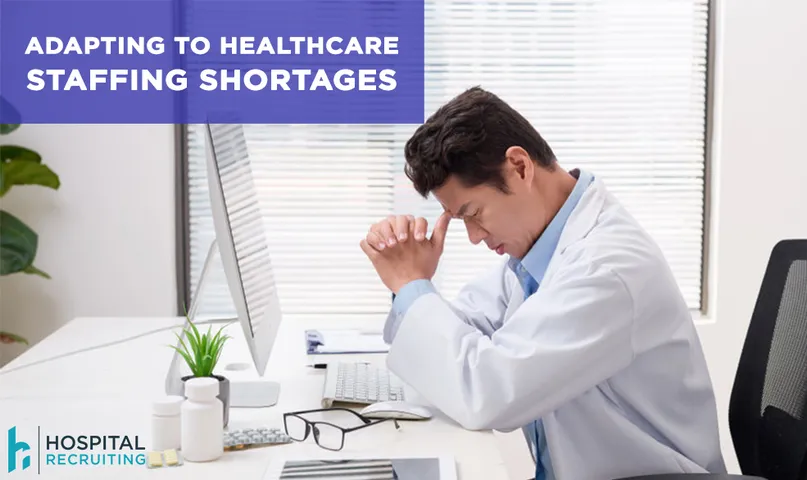
You don’t need to be told how difficult it is to manage your facility these days -- you’re living it. Shortages of physicians, nurses and other clinicians is making it challenging, if not impossible, for many institutions to provide services and patient care. Many have closed entire departments in response to staffing shortages; others have reduced services.
Demand has not diminished – for many providers it’s increased. Add to the mix new and evolving regulations and most facilities and practitioners are overwhelmed and under pressure. Hospital recruitment professionals are scrambling to fill positions in an increasingly difficult and shrinking talent market. The situation is dire for many institutions, but there are ways to adapt during these unprecedented times.
Three-pronged approach
Healthcare providers may need to look at staffing challenges from three different perspectives: how to maximize existing talent, how to mitigate churn, and when to leverage alternate resources that may be available.
Maximize existing talent

Collaborate with staff on solutions that work for the facility and practitioners. Offer programs, and opportunities for staff members to discuss organizational issues and develop solutions. Brainstorming can quickly devolve into complaint sessions, so offer staff a podium to voice their concerns, but shift the dialogue to solutions.
Workers know when they’re using their licensure and when they’re engaging in low-value tasks. Listen to their ideas on how to shift these tasks and protocols so they can spend more time leveraging their talent appropriately. If you can, decrease time wasted on emails, streamline electronic processes, and exchange meetings for messages. There may be dozens of low value tasks that can be eliminated or delegated. Removing those could be key to maximizing services and care with the staff you have in place.
Mitigate churn

Reducing turnover has never been more critical for healthcare providers. Talent shortages have long plagued the industry, but today’s shortages are unprecedented. Approximately 16% of healthcare facilities faced critical staffing shortages in October 2021; by 2026 the US will see a deficit of over 3 million workers in the industry. Any initiative facilities can use to maintain current staff is a worthwhile endeavor and investment.
Avoid staff burnout. It may seem like the only solution, but long hours and additional shifts are a short-term fix with costly, long-term consequences. Exhaustion, stress, and fatigue can lead directly to churn. Ensure employees have 8 to 12 uninterrupted hours off between shifts and limit shifts to 12 hours maximum whenever possible.
One study found physicians had twice the risk for burnout compared to other workers; some 60 to 75% of clinicians reported symptoms of exhaustion, depression, sleep disorders and PTSD, with nurses equally or more stressed. Burnout was estimated to cost the healthcare industry $4.6 billion a year before COVID-19. There are few details yet on post-pandemic damages.
Identify workers who may be at risk for burnout and offer solutions and resources. Early intervention may be key to retention. A few days off may pose an immediate challenge, but it could prevent a long-term problem.
Provide stress management classes onsite and online to help clinicians deal with problems they face during the workday and beyond. Communicate and promote these resources widely to staff, encouraging them to leverage tools that can help them manage stress levels and work/life balance.
Leverage alternate resources

Upskilling existing staff can be an excellent way to leverage alternate resources. Identify staff members who may be clinician-adjacent with potential and suggest training and development. Look at all staff members as a resource – and whether you can delegate tasks that ease the burden on practitioners. Work with team members to identify where they can help their colleagues, or where they can use help, with or without specific training.
Telehealth services may be another tool facilities can leverage to free up resources and save time. Expanding telehealth services may allow healthcare facilities to see non-acute patients in less time, freeing up capacity for critical patients.
Other technologies may also be available that help streamline processes and improve care. Look for tools that manage patient data, update records, and expedite prescription and billing processes. Another emerging technology allows clinicians to monitor patients at a distance. Wearables, sensors, and other tools can maximize time with patients in need as they eliminate rote tasks. Keep an eye on evolving tech in the industry to see where and how it can work for your institution.
More fallout from COVID-19
If the pandemic worsened problems for your institution, the CDC has offered guidance to facilities experiencing shortages due to COVID-19. They suggest mitigation strategies that can help ease the burden of staffing shortages due to exposure or contraction of the virus.
Healthcare providers are facing extraordinary challenges, exacerbated by the pandemic. They will need to look for creative solutions that leverage the ideas and talent of existing resources, as well as external tools to weather this unprecedented storm.
Related Posts